

Recertification Inspection Checklist and Sample Reports.
P.E. #67462 · Level III CIT® #19397 · Engineering Business Registry #28738 · Miami · 41 Years Since Engineering Degree.
Florida law (F.S. 471.023) requires an Engineering Business Registry number to offer engineering services. Ours: #28738.
Updated November 26, 2026 · By Armando Longueira, P.E. #67462, Level III CIT® #19397.
★★★★★ 5.0 on Google · One engineering firm seals the complete recertification — structural, electrical, infrared, illumination, and guardrails.
Did you receive a Notice of Required Inspection? The report is due within 90 days of that notice. One engineering firm inspects and seals your complete package — structural, electrical, infrared, illumination, and guardrails. Sec. 8-11(f)(2)(E).
Call (786) 318-7203. Request a same-day estimate.
A complete package starts at $5,600.
Hablamos Español.
This page shows what the engineers check during a recertification, how to prepare the building, and what the sealed reports look like. The general rules are in our 40-year recertification guide.
How to read this page. Each rule is given in plain words, and the link after it opens the official text.
Inspection questions: 11 answers.
What Do Engineers Check?
The engineers check each part of the building for the damage that time causes, mainly moisture and corrosion. County guidelines, 2025.
- Foundations. Settlement, cracks, and loss of bearing in floors and roofs.
- Roofs. Blisters, wrinkling, loss of gravel, ponding, and loose flashing.
- Masonry walls. Cracks, bulging, moisture, and corroding reinforcing steel.
- Floors, beams, and columns. Corroded reinforcing steel, spalling, honeycombing, and added loads on deck slabs and plaza decks.
- Balconies. Location, framing system, material, and condition.
- Steel and wood framing. Corrosion at fasteners, welds, and column bases; dry rot and termites.
- Windows, doors, and façade. Sealants, glazing, anchorage, and anything that can detach.
- Parking garages. Underground and lower-level garages face flooding, a high water table, and corrosion. County guidelines, 2025.
- Stairwells and service areas. Utility and maintenance areas, stairwells, and elevator shafts, where the structure can be seen bare. County guidelines, 2025.
- Electrical. The County form lists service, meters, electric rooms, gutters, panels, branch circuits, grounding, conduit, wires and cables, busways, infrared thermography, wiring methods, emergency lighting, egress lighting, the fire alarm, smoke detectors, exit lights, the emergency generator, parking garage wiring and lighting, swimming pool wiring, and wiring to mechanical equipment. County electrical form.
- Tests. The inspection is visual; testing and measurements are generally not required. The engineer adds them only when a condition calls for it. County guidelines, 2025.
- Records. Permits, open violations, unsafe-structure cases, and work done without a permit.
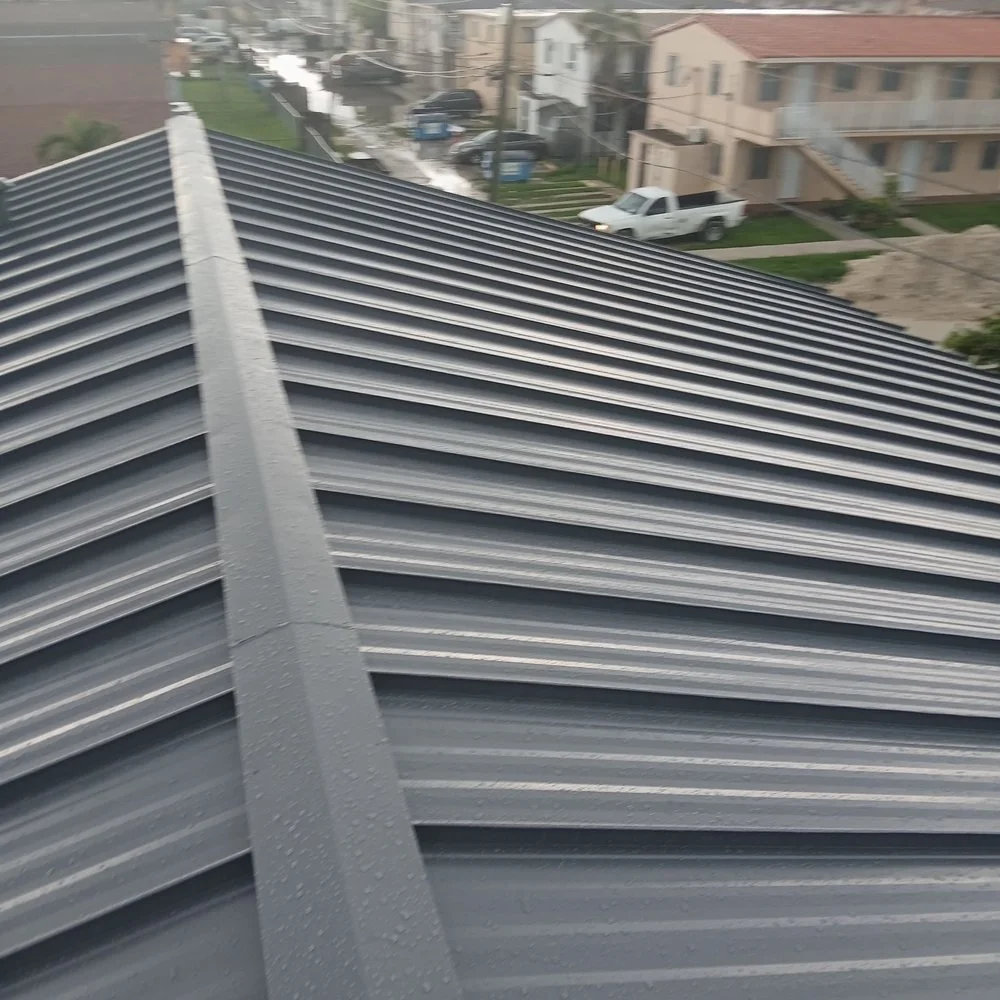
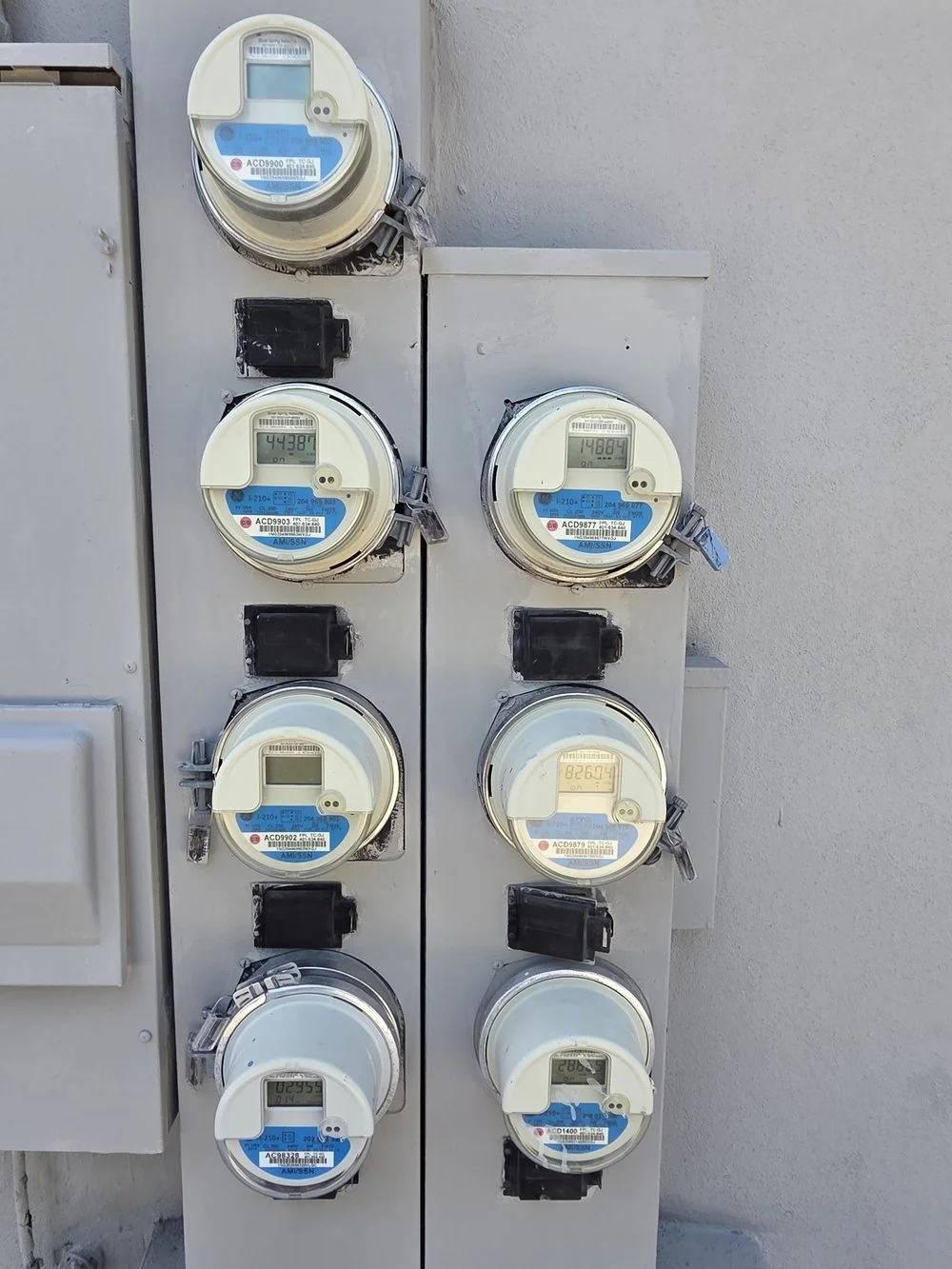
The building is checked against the code in effect when it was built, not against today’s code. Additions built without a permit must be reported and legalized before the recertification process can be completed. County guidelines, 2025.
Are Illumination and Guardrails Included?
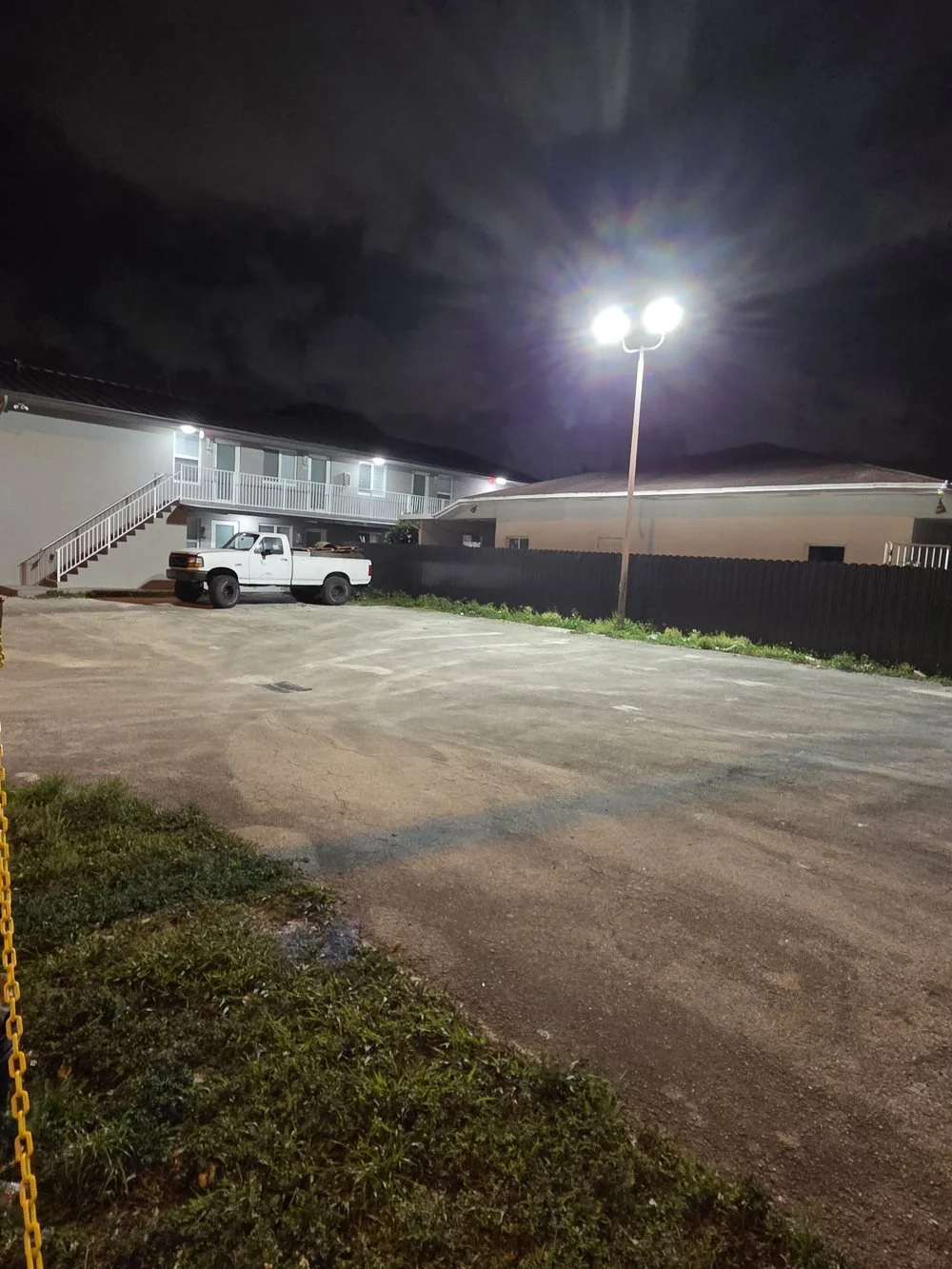
Yes. The packet includes a certification of the parking illumination and, where the lot is next to a canal, lake, or other body of water, a certification of the guardrails. County page.
- Illumination. It applies in the cities and in the unincorporated area, to new and existing buildings. Open parking lots need a maintained minimum of 1 foot-candle from dusk until dawn — 0.5 for factory, hazardous, institutional, storage, and residential-care occupancies — with a uniformity ratio of no more than 12 to 1. Secs. 8C-2 and 8C-3.
- Guardrails. The rule applies in the unincorporated area, and it can apply in any city that requires it. The barrier must be of a type approved for crashworthiness by the Federal Highway Administration and installed with a building permit. Secs. 8C-2 and 8C-6.
What Is Structural Glazing Recertification?
It is a separate recertification inspection for threshold buildings with a structural sealant glazing façade: every six months during the first year after installation, then every five years. The owner receives a separate notice and has 90 days to submit the façade report. County page.
How Do You Prepare?
Gather permits, plans, the old inspection reports, and the repair history, then arrange access — electrical rooms, roof, and mechanical and common areas. A prepared building closes in one visit.
Start when the first courtesy notice arrives, two years ahead. Tell the residents, plan access to units, balconies, the garage, and the roof, and keep the electrical rooms clear — storage there is a common finding. Condominium boards should also plan the budget for any repairs.
Three things hold up an approval: the wrong report template, repairs made without the proper permits, and — on a threshold building — a missing self-qualification letter from the structural engineer.
What Does the Report Look Like?
Seven sample documents in PDF — sealed reports, cover letters, and certifications — with the owner’s details redacted.
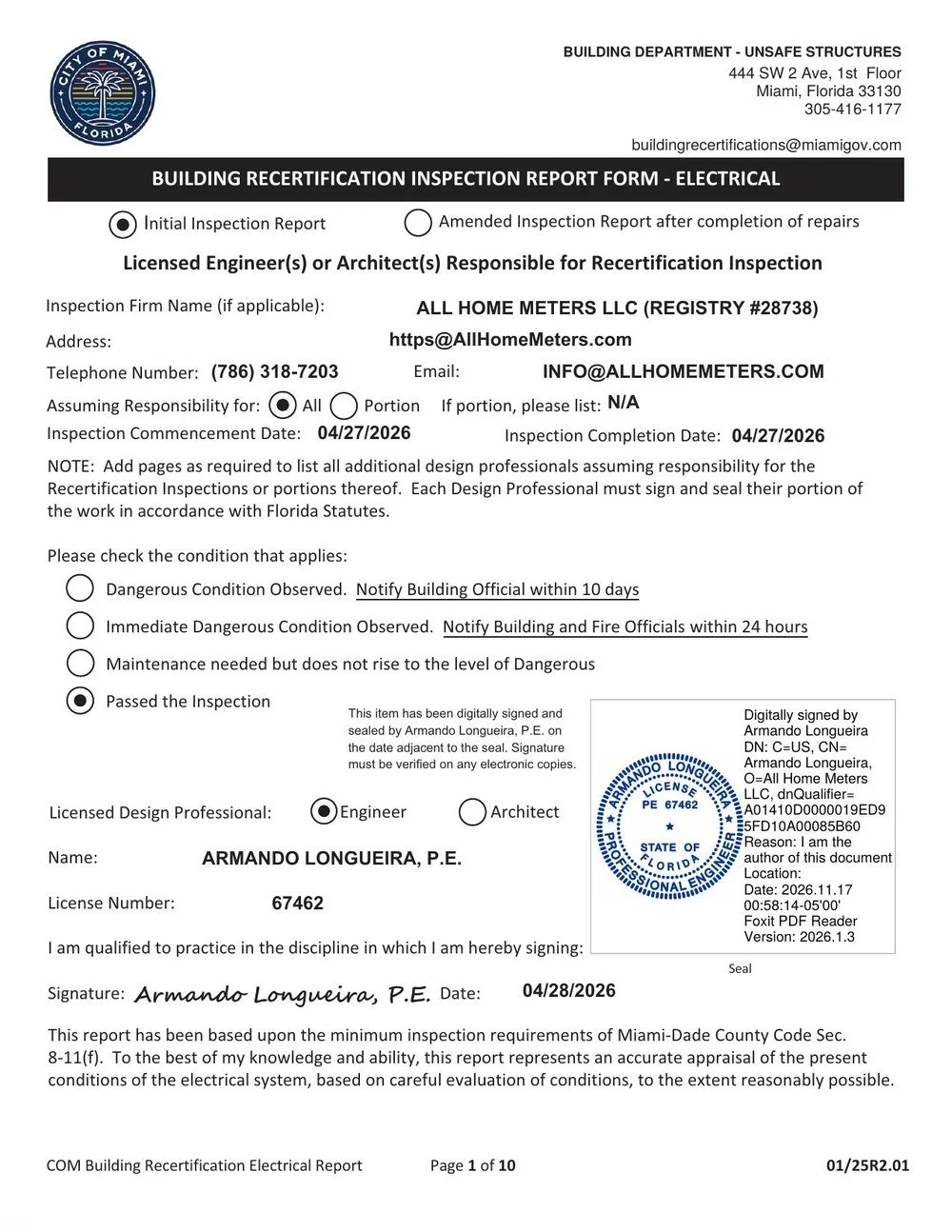
Each observation is rated Good, Fair, Poor, or Significant — Significant means a dangerous condition. County guidelines, 2025. Every report states the manner and type of inspection and any matter that needs repair, and it carries the seal and signature of the engineer or architect who performed the inspection, or a verifiable digital signature. Sec. 8-11(f)(2)(E)(iii) and (v).
Each report comes with a cover letter stating that the building is not unsafe for continued occupancy, and with photos in color. County guidelines, 2025.
How Is the Report Submitted?
You submit the report to the building department that sent the notice. For the unincorporated area, the County receives it through its portal, by mail, or in person, and electronic reports must be digitally signed and sealed. With several buildings on one property, add a site plan or survey that shows each building. County page.
Who Can Inspect?
A Professional Engineer or Architect registered in Florida prepares the report, and only where qualified by training and experience in that technical field. On a Threshold Building, a structural engineer prepares the structural part and an electrical engineer the electrical part, and the structural engineer adds a self-qualification letter with proof of structural specialization. Sec. 8-11(f)(2)(E).
A Threshold Building is a building of more than three stories or 50 feet in height, or an assembly occupancy of more than 5,000 square feet and more than 500 persons. Sec. 8-11(f)(1)(C).
The infrared scan is done by a Level II or higher certified infrared thermographer with more than 5 years of experience inspecting the electrical systems of commercial buildings. That experience is the thermographer’s, and it can come from electrical inspections in general. County guidelines, 2025. County memo of July 22, 2022.
Duty to Report.
Any engineer or architect who inspects an existing building must report to the Building Official any finding that would endanger life or property if left unaddressed, no later than 10 days after informing the owner, unless the professional learns that action has been taken under the applicable code. An actual or immediate danger of failure or collapse, or a health, windstorm, or fire hazard, must be reported within 24 hours of discovery. The Building Official reports violations of this duty to the licensing agency and the regulatory board, in addition to any fines. Sec. 8-11(e).
The engineer who inspects is the engineer who signs. At All Home Meters, each report is signed and sealed by the engineer who performed that inspection: Florida Professional Engineers, electrical and structural, and Level III Certified Infrared Thermographers.
Why All Home Meters?
All Home Meters delivers a complete recertification package — electrical and structural, with infrared thermography, illumination, and guardrails — under one accountable engineering firm. Armando Longueira, P.E., carries the electrical license and the Level III infrared thermography certification in one person. He seals the electrical, infrared, and illumination work he performs with a NIST-calibrated FLIR E96, and the structural inspection on buildings of three stories or fewer.
A structural engineer on staff covers the threshold buildings. Call (786) 318-7203 to schedule an inspection.
All Home Meters has served Miami-Dade since 2009, and Armando Longueira has been a Florida P.E. since 2007. The firm has logged more than 5,000 hours of infrared thermography and has inspected thousands of buildings, with a sealed report for each. He is also a HUD and FHA inspector.
What Clients Say.
"When we had to do our recertification, we called Mr. Longueira. We made an appointment, and he was at our place on the date and time. Our report was done promptly and very professional."
"Most professional and dependable PE that we have worked with in the industry — always an email or a phone call away when you need it. We have been in the electrical business almost 50 years and had our share of PEs through the years; this one is top of the list."
"I recently hired All Home Meters / Armando Longueira to perform the 40-year inspection on my property, and I couldn't be more pleased with the experience. From start to finish, their team was punctual, thorough, and highly knowledgeable."
"Very reliable! I needed a 40 year inspection done and they were on top of it. Always responsive, quick to act, and very helpful throughout the process. Made my life easy! It's refreshing to find such good service!"
Service Area.
Our inspections cover Hialeah, Miami, Miami Beach, Coral Gables, Doral, Homestead, and every other municipality of the County — Aventura, Bal Harbour, Bay Harbor Islands, Biscayne Park, Cutler Bay, El Portal, Florida City, Golden Beach, Hialeah Gardens, Indian Creek, Key Biscayne, Medley, Miami Gardens, Miami Lakes, Miami Shores, Miami Springs, North Bay Village, North Miami, North Miami Beach, Opa-locka, Palmetto Bay, Pinecrest, South Miami, Sunny Isles Beach, Surfside, Sweetwater, Virginia Gardens, and West Miami — plus the unincorporated area. Neighborhoods: Brickell, Downtown, Coconut Grove, Little Havana, Allapattah, Wynwood, Westchester, Dadeland, and Kendall.
Ready to Schedule?
To schedule your recertification, or to ask about its price, you can email us, call us, or fill out our contact form. A pre-estimate is also available online.
Related: Thermography · Electrical · Structural · Parking-Lot Illumination · Milestone · Español.
