

40-Year Recertification — Miami-Dade County Building Inspection Program & Cost.
P.E. #67462 · Level III CIT® #19397 · Engineering Business Registry #28738 · Miami · 41 Years Since Engineering Degree.
Updated November 22, 2026 · By Armando Longueira, P.E. #67462, Level III CIT® #19397.
★★★★★ 5.0 on Google · One firm seals complete Building Recertifications — structural, electrical, infrared, illumination, and guardrails.
Hablamos Español.
All Home Meters performs the 40-year building recertification in Miami, at the cost listed below, for property owners, condominium associations, and managers — in the City of Miami, Hialeah, Miami Beach, Doral, Homestead, Coral Gables, every other city of Miami-Dade County, the unincorporated County, and Broward County — with structural, electrical, infrared, illumination, and guardrail inspections, each report sealed by a Florida-licensed professional engineer.
Did you receive a Notice of Required Inspection? The report is due within 90 days of that notice. One engineering firm inspects and seals your complete package — structural, electrical, infrared, illumination, and guardrails. Sec. 8-11(f)(2)(E).
Call (786) 318-7203. Request a same-day estimate.
A complete package starts at $5,600.
How to read this page. Each rule is given in plain words, and the link after it opens the official text.
On this page: 23 sections.
- What it is.
- The requirements.
- Which buildings need it, and which are exempt.
- When your building is due.
- The notices.
- The process, step by step.
- The report deadline, early filing, and extensions.
- Repairs.
- A missed deadline: penalties and disconnection of electricity.
- What the inspection includes.
- What the engineers check, part by part.
- Parking lot illumination and guardrails.
- Structural glazing façade.
- Sample sealed reports.
- How to submit the report.
- Where to file: the City of Miami and other cities.
- Who can perform the inspection.
- Duty to Report.
- Cost.
- Recertification and the milestone inspection.
- Broward County.
- Official sources.
- Schedule your inspection.
What Is a 40-Year Recertification?
A Miami-Dade County 40-year building recertification is a mandatory safety inspection of an older building’s structure and electrical systems, followed by a report that a Florida-licensed engineer or architect signs and seals. The report tells the Building Official whether the building is safe for continued occupancy. The program — Miami-Dade County’s since 1975, amended on June 1, 2022 — is set by Section 8-11(f) of the County Code. Section 8-11(f).
When your building first comes due depends on its age, type, and location.
What Are the Requirements?
The recertification requirements are a building inspection at the right age, a sealed report within 90 days of the notice, and repairs with permits when the report calls for them. Compliance is the owner’s duty. Sec. 8-11(f)(2)(E).
- The age. 30 years for most buildings, 40 for buildings built in 1982 or earlier, and 25 for coastal condominiums and cooperatives of three stories or more — then every 10 years. Sec. 8-11(f)(2)(A). County recertification page.
- The inspections. Structural and electrical, plus the infrared scan, the parking lot lighting, and the guardrails where they apply. Sec. 8-11(f)(2)(C).
- The report. It certifies that the building is structurally and electrically safe, or has been made safe, for continued occupancy. Sec. 8-11(f)(2)(E).
- The deadline. 90 days from the notice, with an extension of up to 60 days possible. Sec. 8-11(f)(2)(E) and (I).
- The repairs. Within 150 days of the notice. Sec. 8-11(f)(2)(F).
Did the Name Change?
The name stayed, but the first inspection now comes at 30 years — 25 for coastal condominiums and cooperatives of three stories or more — and repeats every 10 years. Since the 2022 amendment it runs as the Building Recertification Program, and both names mean the same inspection.
Buildings built in 1982 or earlier keep the 40-year start, and repeat the inspection every 10 years. Sec. 8-11(f)(2)(A)(ii).
The historic name survives in everyday use, in bank and insurance checklists, and in other cities’ ordinances. The requirement, the forms, and the sealed report are identical, and we perform it under both names.
Which Buildings Need It?
Every building needs a recertification inspection except single-family residences, duplexes, and minor structures — those with an occupant load of 10 or less and a gross area of 2,000 square feet or less. Sec. 8-11(f)(1)(B) and (2)(A).
Apartments, condominiums, offices, warehouses, and industrial properties are typical — commercial and residential alike. In condominiums, the association carries the inspection duty and its costs, and an overdue obligation follows the property into any sale.
Each municipality’s building official has jurisdiction over the recertifications in its city, so the notice comes from the city where the building stands, or from the County in the unincorporated area. County recertification page.
When Is My Building Due?
Your building is due at 30 years of age — at 25 if it is a condominium or cooperative of three stories or more within three miles of the coastline — and every 10 years after that. See the table below. The age is the present year minus the year built recorded with the County Property Appraiser, and renovations do not reset it. Sec. 8-11(f)(1)(D).
| Year built. | First recertification. | After that. |
|---|---|---|
| 1982 or earlier. | At 40 years. | Every 10 years. |
| 1983 to 1992. | Was due by December 31, 2024. | Every 10 years. |
| 1983 to 1997, coastal condominium or cooperative of three stories or more. | Was due by December 31, 2024. | Every 10 years. |
| 1993 or later. | At 30 years. | Every 10 years. |
| 1998 or later, coastal condominium or cooperative of three stories or more. | At 25 years. | Every 10 years. |
Coastal means within three miles of the coastline. County recertification page.
In 2026, a building recorded as built in 1996 reaches 30 years, and a coastal condominium built in 2001 reaches 25. Find your year built with the County Property Appraiser.
How Do You Check a Property?
Look the property up — by address or folio — on the County’s portal or with your city’s building department, before any notice arrives; the obligation runs with the structure’s age. Buyers should run the same check before closing.
In the unincorporated area — a folio number that begins with 30 — check your status on the Recertification Portal, or call (786) 315-2373. In Broward County, see the Building Safety Inspection Program. Boca Raton posts its Building Recertification Inspection Program, Boynton Beach its Building Recertification page, and Monroe County its Building Safety Inspection Program. Every other municipality keeps its own list — call them, or send us the address and we run the check.
A filed report is a public record, and anyone can request a copy. County recertification page.
What Notices Are Sent?
The Building Official sends two courtesy notices, two years and one year before the due year, and then the Notice of Required Inspection, which starts the 90 days. A courtesy notice that never arrives does not move the deadline. Sec. 8-11(f)(2)(D).
How Does the Process Work?
Most building owners receive a Notice of Required Recertification and have 90 days to submit the report. The ordinance calls it the Notice of Required Inspection. The recertification process has six steps. Sec. 8-11(f)(2).
- Step 1 — Courtesy notices. They arrive two years and one year ahead.
- Step 2 — The notice. This notice starts the 90 days.
- Step 3 — The inspections. Your engineers perform the inspections described below.
- Step 4 — The report. Each report is signed and sealed by the professional who performed the inspection, and it is filed with the building department.
- Step 5 — Repairs, if any. The 150-day rule below applies.
- Step 6 — Approval. With no repairs, the first report completes the process; after repairs, the engineer files an amended report.
The next one is due in 10 years.
When Is the Report Due?
The report is due within 90 days of the notice, and you can file it early, from two years before the anniversary. Sec. 8-11(f)(2)(E).
The official may grant an extension of up to 60 days, on a written request from the professional of record with a sealed statement that the building can stay occupied. Sec. 8-11(f)(2)(I).
What If Repairs Are Needed?
You have 150 days from the notice to finish the repairs that need no permit and to obtain the permits for the rest; permitted repairs then follow the timeline of the permit. Sec. 8-11(f)(2)(F).
- During the repairs, the professional of record gives the official a letter stating whether the building can stay occupied; each letter is valid for up to 180 days. Sec. 8-11(f)(2)(G).
- When the repairs are done, the same professionals file an amended report. Sec. 8-11(f)(2)(H).
- Do not start repairs without permits: most repairs need one, and work without a permit can become a violation. County guidelines, 2025.
- The County may ask the owner to shore up the structure while the repair plans are prepared. County page.
What If You Miss the Deadline?
Miss the 90-day deadline and the County issues a citation without further notice. There is an initial penalty, further penalties can add up for each violation, unpaid amounts can become a lien, and a late report pays a late fee. The official may also order the electricity disconnected, and an unsafe building can be ordered vacated. County page.
- Electricity. The official may order the electricity disconnected. First, a notice goes to the owner by certified mail and stays posted on the building for at least 5 business days. Sec. 8-11(f)(2)(J).
- Tenants. The association, manager, or landlord must pass that notice in writing to all unit owners and tenants within 24 hours, and send proof to the Building Official within three business days. Sec. 8-11(f)(2)(J).
- How to stop it. A sealed statement from the professional of record that the building can stay occupied stops the disconnection. Sec. 8-11(f)(2)(J).
- Unsafe structure. A building that stays out of compliance may be demolished, and where there is immediate danger the official may order the occupants to vacate. Sec. 8-5.
To stay in compliance, start the inspections when the first courtesy notice arrives.
Is your deadline close? Send us the notice and the property address. We answer the same day with the scope and the price.
What Is Inspected?
The inspection covers the building’s structure and its electrical systems, with an infrared scan when the electrical service is 400 amperes or more, plus the parking illumination and the guardrails next to water. It follows the Minimum Inspection Procedural Guidelines issued by the Board of Rules and Appeals. Sec. 8-11(f)(2)(B) and (C).
- The structural inspection reviews foundations, columns, beams, slabs, and envelope for cracks, corrosion, and spalling.
- The electrical inspection grades electrical system safety — service, metering, panels, feeders, and grounding.
- The thermography scan is required when the electrical service is rated 400 amperes or more. It is done energized and covers the equipment fed by that service, even pieces rated below 400 amperes. County guidelines, 2025. County memo of July 22, 2022.
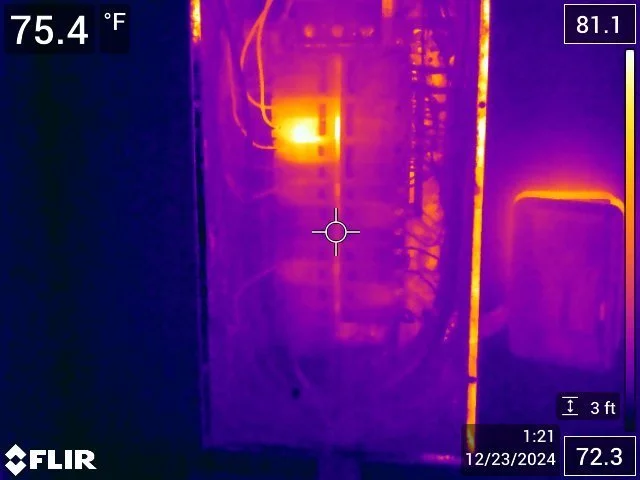
The examination is visual first, with testing only where the visual examination shows the need. Findings are graded Good, Fair, Poor, or Significant. Only the County’s report templates are accepted, and since January 2025 the 2025 templates are required. County guidelines, 2025. County page.
What Do Engineers Check?
The engineers check each part of the building for the damage that time causes, mainly moisture and corrosion. County guidelines, 2025.
- Foundations. Settlement, cracks, and loss of bearing in floors and roofs.
- Roofs. Blisters, wrinkling, loss of gravel, ponding, and loose flashing.
- Masonry walls. Cracks, bulging, moisture, and corroding reinforcing steel.
- Floors, beams, and columns. Corroded reinforcing steel, spalling, honeycombing, and added loads on deck slabs and plaza decks.
- Steel and wood framing. Corrosion at fasteners, welds, and column bases; dry rot and termites.
- Windows, doors, and façade. Sealants, glazing, anchorage, and anything that can detach.
- Electrical. Service size and protection, grounding, panels, branch circuits, wiring methods, emergency lighting, exit signs, and the fire alarm.
- Records. Permits, open violations, unsafe-structure cases, and work done without a permit.
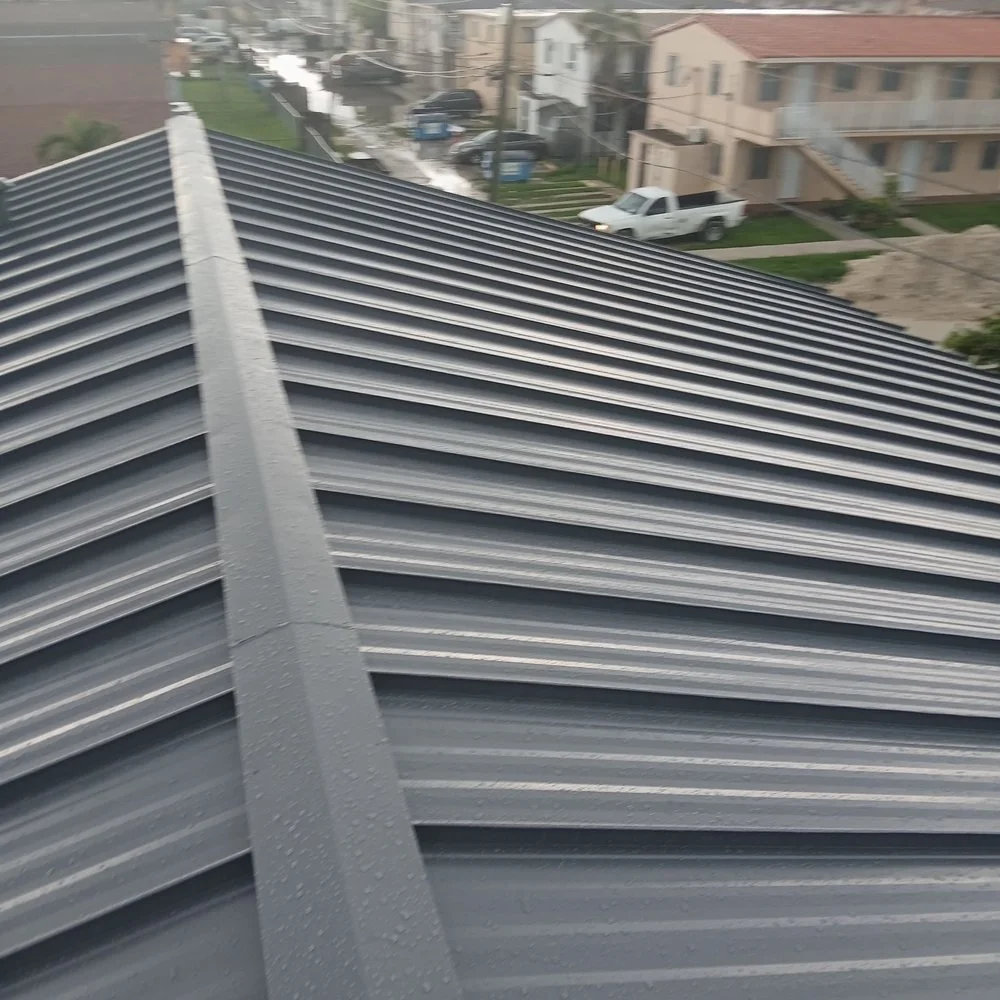
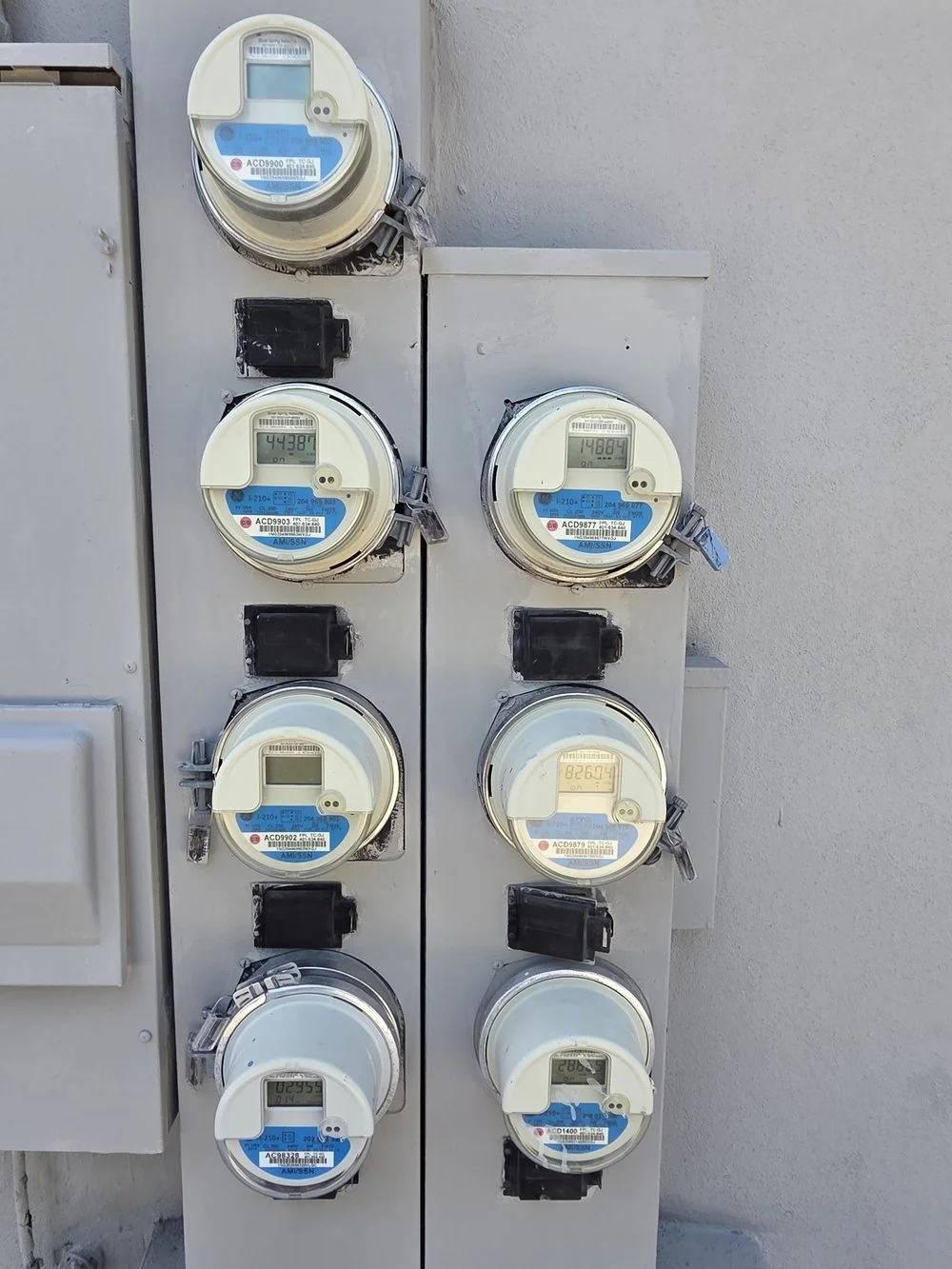
The building is checked against the code in effect when it was built, not against today’s code. Additions built without a permit must be reported and legalized before the recertification process can be completed. County guidelines, 2025.
Are Illumination and Guardrails Included?
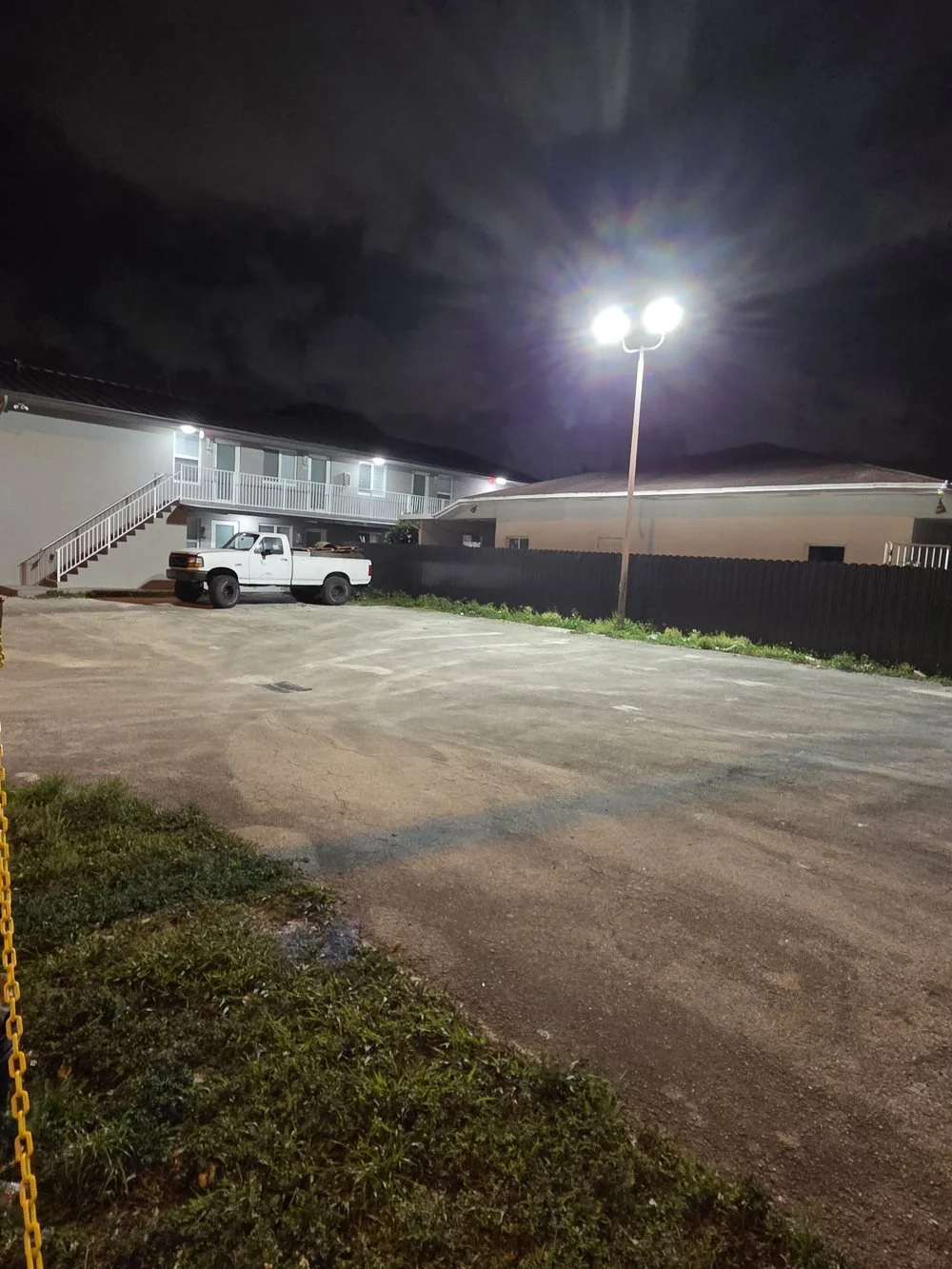
Yes. The packet includes a certification of the parking illumination and, where the lot is next to a canal, lake, or other body of water, a certification of the guardrails. County page.
- Illumination. It applies in the cities and in the unincorporated area, to new and existing buildings. Open parking lots need a maintained minimum of 1 foot-candle from dusk until dawn — 0.5 for factory, hazardous, institutional, storage, and residential-care occupancies — with a uniformity ratio of no more than 12 to 1. Secs. 8C-2 and 8C-3.
- Guardrails. The rule applies in the unincorporated area, and it can apply in any city that requires it. The barrier must be of a type approved for crashworthiness by the Federal Highway Administration and installed with a building permit. Secs. 8C-2 and 8C-6.
What Is Structural Glazing Recertification?
It is a separate recertification inspection for threshold buildings with a structural sealant glazing façade: every six months during the first year after installation, then every five years. The owner receives a separate notice and has 90 days to submit the façade report. County page.
How Do You Prepare?
Gather permits, plans, the old inspection reports, and the repair history, then arrange access — electrical rooms, roof, and mechanical and common areas. A prepared building closes in one visit.
Three things hold up an approval: the wrong report template, repairs made without the proper permits, and — on a threshold building — a missing self-qualification letter from the structural engineer.
What Does the Report Look Like?
Seven sample documents in PDF — sealed reports, cover letters, and certifications — with the owner’s details redacted.
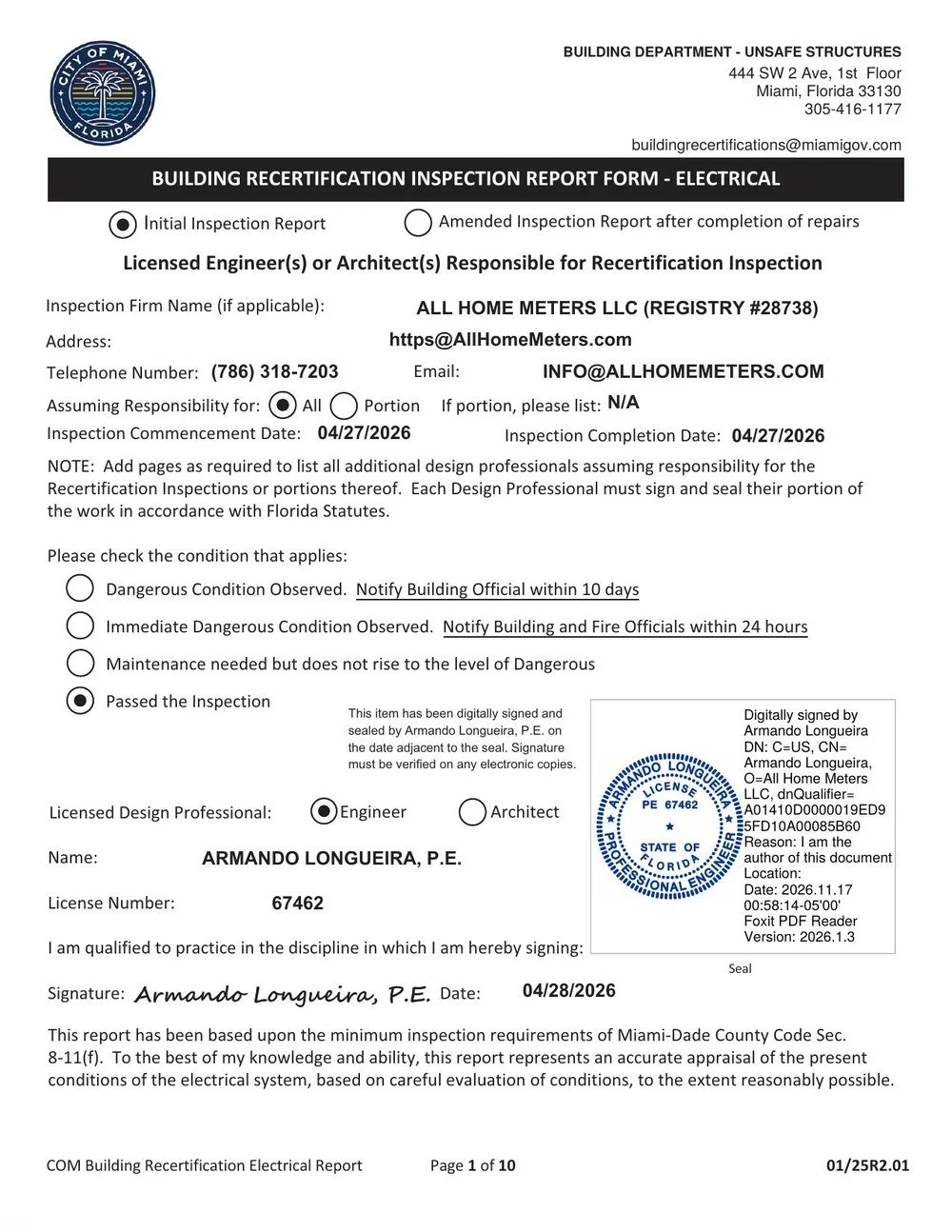
Every report states the manner and type of inspection and any matter that needs repair, and it carries the seal and signature of the engineer or architect who performed the inspection, or a verifiable digital signature. Sec. 8-11(f)(2)(E)(iii) and (v).
Each report comes with a cover letter stating that the building is not unsafe for continued occupancy, and with photos in color. County guidelines, 2025.
How Is the Report Submitted?
You submit the report to the building department that sent the notice. For the unincorporated area, the County receives it through its portal, by mail, or in person, and electronic reports must be digitally signed and sealed. With several buildings on one property, add a site plan or survey that shows each building. County page.
Where Do You File in Miami-Dade?
One County law sets the program for all of Miami-Dade, but each city runs it inside its own limits, and the County runs it in the unincorporated area. Building owners file with the Building Department of the city where the building stands, and buyers and real estate agents ask the same office for a building’s status. Reports filed with a building department are public records under Florida law. Section 119.011, F.S. County Property Appraiser page.
City of Miami.
In the City of Miami, the Recertification Division of the Building Department’s Unsafe Structures Section runs the program. Owners who are not overdue submit online through iBuild and ePlan (ProjectDox), and the package holds the structural and electrical reports, the infrared thermography inspection, a signed and sealed cover letter, and the parking illumination letter when it applies. The City says it answers within six weeks with a completion letter or a list of changes. City of Miami page.
Hialeah, Miami Beach, Doral, Homestead, and Coral Gables.
- In Hialeah, the Building Division mails the letters each year, and a report not filed on time sends the case to the City’s Special Magistrate. City of Hialeah page.
- In Miami Beach, the Recertification Section of the Building Department takes digitally signed reports through its Citizen Self Service portal or by email, with forms for the structural and electrical reports and for parking lot guardrails and illumination. City of Miami Beach page.
- In Doral, the Building Department runs the Building Recertification Program and accepts the 10-year renewal reports online. City of Doral page.
- In Homestead, Building Safety runs the program under Section 8-11(f) of the County Code. City of Homestead page.
- In Coral Gables, the Building Division takes the package, including the guardrail certificate, and issues a Building Recertification letter once the building complies, then every 10 years. City of Coral Gables page.
We inspect and seal the reports for buildings in all of these cities and in the rest of the County.
Can a Recertification Be Audited or Revoked?
Yes. The County makes quality control inspections on selected properties, and the Building Official may revoke a recertification if the report misrepresents the actual conditions of the building. Sec. 8-11(f)(2)(K). County program page.
Who Can Inspect?
A Professional Engineer or Architect registered in Florida prepares the report, and only where qualified by training and experience in that technical field. On a Threshold Building, a structural engineer prepares the structural part and an electrical engineer the electrical part, and the structural engineer adds a self-qualification letter with proof of structural specialization. Sec. 8-11(f)(2)(E).
A Threshold Building is a building of more than three stories or 50 feet in height, or an assembly occupancy of more than 5,000 square feet and more than 500 persons. Sec. 8-11(f)(1)(C).
The infrared scan is done by a Level II or higher certified infrared thermographer with more than 5 years of experience inspecting the electrical systems of commercial buildings. That experience is the thermographer’s, and it can come from electrical inspections in general. County guidelines, 2025. County memo of July 22, 2022.
Duty to Report.
Any engineer or architect who inspects an existing building must report to the Building Official any finding that would endanger life or property if left unaddressed, no later than 10 days after informing the owner, unless the professional learns that action has been taken under the applicable code. An actual or immediate danger of failure or collapse, or a health, windstorm, or fire hazard, must be reported within 24 hours of discovery. The Building Official reports violations of this duty to the licensing agency and the regulatory board, in addition to any fines. Sec. 8-11(e).
The engineer who inspects is the engineer who signs. At All Home Meters, each report is signed and sealed by the engineer who performed that inspection: Florida Professional Engineers, electrical and structural, and Level III Certified Infrared Thermographers.
40 Year Recertification Miami: How Much Does It Cost?
The work is priced by specialty, and a complete package — structural, electrical, infrared, and illumination — starts at $5,600.
- Structural starts at $1,600.
- Electrical inspections at $1,600.
- Illumination at $800.
- The infrared scan is $160 per component for the first 20 components and $80 for each additional component. The minimum charge is $1,600, which covers up to 10 components. One component is one piece of the electrical equipment listed by the Board of Rules and Appeals (BORA), such as a panel, a disconnect, or a gutter. County guidelines, 2025.
- Re-inspections from $800 per specialty.
Final cost depends on location, size, height, age, service capacity, and any repair and re-inspection across repeat cycles. Provide the property address or folio number and your email address for a same-day estimate.
These prices cover the engineering inspections and the sealed reports. They do not include repairs, permits, or the filing fees that the County or your city charges; the County publishes its fees in its Fee Schedule.
How Do Owners Pay?
Building owners pay for the inspections and the reports. In a condominium or cooperative, State law makes the association responsible for the cost of the milestone inspection of the parts it maintains. Section 553.899(4), F.S.
For condominiums, findings land alongside Florida’s Structural Integrity Reserve Study rules, which require reserves for items whose deferred maintenance or replacement cost exceeds $25,000, adjusted for inflation. Deferred maintenance returns as a special assessment. Section 718.112(2)(f), F.S.
Recertification or Milestone Inspection?
The milestone inspection is a State law for condominium and cooperative buildings of three stories or more, and it is structural only; the building recertification is the County’s program, structural and electrical. In Miami-Dade the recertification report counts as compliance with the milestone inspection, so one report covers both. Sec. 8-11(f)(2)(A).
State law sets the milestone inspection at 30 years, lets the local agency set it at 25 years near salt water, repeats it every 10 years, and gives 180 days from the notice to complete phase one. Section 553.899, Florida Statutes.
The 25-, 30-, and 40-year marks are one requirement per county, not three. The Dade authority is Section 8-11(f) of its Code; the Broward authority is Section 110.15 of its FBC amendments.
See our milestone inspection page.
How Is Broward Different?
Broward County runs its own Building Safety Inspection Program, and it differs from Miami-Dade in the starting age, the deadlines, and the scope.
| Item. | Miami-Dade County. | Broward County. |
|---|---|---|
| First inspection. | 30 years; 40 for buildings built in 1982 or earlier; 25 for coastal condominiums. | 25 years. |
| Repeats. | Every 10 years. | Every 10 years. |
| Report deadline. | 90 days from the notice. | 180 days from the notice. |
| Repairs. | 150 days from the notice. | 180 days from the report. |
| Thermal imaging. | Required at 400 amperes or more. | At the professional’s discretion. |
| Exempt. | Single-family residences, duplexes, and minor structures up to 2,000 square feet. | One- to four-family dwellings of three stories or fewer, and minor structures under 3,500 square feet. |
Confirm your dates with the building department that sent the notice. Sec. 8-11(f). Broward program brochure, September 2024.
Where Did the 40-Year Building Recertification Come From?
The program began in Miami-Dade County in 1975, one year after a federal office building in downtown Miami collapsed on August 5, 1974, killing seven people.
The collapse of Champlain Towers South in Surfside on June 24, 2021, which killed 98 people, led the County to amend the program on June 1, 2022, and led the State to pass its milestone inspection law, Senate Bill 4-D, in 2022.
Official Sources.
The rules on this page were checked against these official sources on November 16, 2026. Codes change, so each link opens the current official text.
- Miami-Dade County Code, Section 8-11, Existing buildings: paragraphs (e) and (f).
- Miami-Dade County Code, Section 8-5, Unsafe Structures.
- Miami-Dade County Code, Chapter 8C: Sections 8C-2, 8C-3, and 8C-6.
- Miami-Dade County, Recertification page.
- Miami-Dade County, General Considerations & Guidelines, revision 01/25R2.0.
- Miami-Dade County Advisory Memo of July 22, 2022, on thermography inspections.
- Section 553.899, Florida Statutes (2026): milestone inspections.
- Section 718.112, Florida Statutes (2026): condominium reserves.
- Broward County Board of Rules and Appeals, program brochure, September 2024.
- Miami-Dade County Property Appraiser, Building Recertification.
- City of Miami, Get a Building Recertification.
- City of Hialeah, Building Recertification.
- City of Miami Beach, Building Recertification.
- City of Doral, Building Recertification Program.
- City of Homestead, Building Recertification.
- City of Coral Gables, Building Recertification.
Service Area.
Our inspections cover Hialeah, Miami, Miami Beach, Coral Gables, Doral, Homestead, and every other municipality of the County — Aventura, Bal Harbour, Bay Harbor Islands, Biscayne Park, Cutler Bay, El Portal, Florida City, Golden Beach, Hialeah Gardens, Indian Creek, Key Biscayne, Medley, Miami Gardens, Miami Lakes, Miami Shores, Miami Springs, North Bay Village, North Miami, North Miami Beach, Opa-locka, Palmetto Bay, Pinecrest, South Miami, Sunny Isles Beach, Surfside, Sweetwater, Virginia Gardens, and West Miami — plus the unincorporated area, Broward County, Boca Raton, and Boynton Beach. Neighborhoods: Brickell, Downtown, Coconut Grove, Little Havana, Allapattah, Wynwood, Westchester, Dadeland, and Kendall.
Why All Home Meters?
All Home Meters delivers a complete recertification package — electrical and structural, with infrared thermography, illumination, and guardrails — under one accountable engineering firm. Armando Longueira, P.E., carries the electrical license and the Level III infrared thermography certification in one person. He seals the electrical, infrared, and illumination work he performs with a NIST-calibrated FLIR E96, and the structural inspection on buildings of three stories or fewer.
A structural engineer on staff covers the threshold buildings. Home services cover the exempt properties. Call (786) 318-7203 to schedule an inspection.
What Clients Say.
"Armando is the best consultant I have worked with in Miami. Look no where else for the Thermo & Recertification inspections."
"I just finished my third (3) 40 Year recertification with the All Home Meters team — Thermography, Electrical, Structural and parking lot illumination. Always professional, always on time, always done right."
"Excellent and professional service. Demonstrates outstanding knowledge, attention to detail. They are efficient, responsive, and a pleasure to work with."
"Working with engineer Armando L. makes the process seamless and pleasant. His knowledge of the industry requirements and compliance is highly appreciated. I will recommend to anyone seeking professionalism and good rates."
"I wish to express my sincere gratitude to All Home Meters for the excellent thermographic and infrared inspection work performed in the electrical rooms of the 17 buildings in our community, as part of the 40-year certification process."
Ready to Schedule?
To schedule your 40-year building recertification in Miami or Broward, or to ask about its cost, you can email us, call us, or fill out our contact form. A pre-estimate is also available online.
Related: Thermography · Electrical · Structural · Parking-Lot Illumination · Milestone · Español.
